



Mr. Royston King

10
Oct 2026
Read More


LET'S HELP OTHERS : BECOME A VOLUNTEER


September is observed globally as Suicide Prevention Month - a time when communities, governments, civil society organisations, health professionals, families and individuals are called upon to confront one of the most difficult public-health challenges of our time.
In 2026, the global suicide-prevention community is bringing the three-year campaign theme "Changing the Narrative on Suicide" to its conclusion, with a powerful call to action: "Start the Conversation." The International Association for Suicide Prevention (IASP) describes this year's focus as an invitation to engage in open and honest discussions about suicide and suicidal behaviour, break down barriers, strengthen connection and build cultures of understanding and support.
The message is both simple and profound: we cannot prevent what we are unwilling to talk about.
For too long, suicide has been surrounded by silence, stigma, fear, misunderstanding and, sometimes, judgment.
People experiencing emotional pain may hesitate to say, "I am not okay." A parent may not know how to respond when a child says that life feels unbearable. A friend may notice that someone has withdrawn but be afraid to ask the difficult question. A colleague may be struggling privately while appearing perfectly functional at work.
And sometimes, we use language that unintentionally increases shame rather than opening a door to help.
Changing the narrative means moving away from blame, sensationalism and silence and towards empathy, understanding, responsible communication and early intervention.
It means recognizing that asking someone directly whether they are thinking about suicide does not create suicidal thoughts. Instead, a caring conversation can create an opportunity for a person in distress to speak, to be heard and to connect with appropriate support.
Suicide is a complex phenomenon. The World Health Organization notes that its causes are multifaceted, involving social, cultural, psychological, biological and environmental factors. More than 720,000 people die by suicide globally each year, making suicide a major public-health concern requiring comprehensive and coordinated action.
We therefore cannot reduce suicide prevention to one institution, one profession or one annual campaign. Suicide prevention is everybody's business.
For Guyana, this conversation carries particular importance.
Our country has experienced the painful consequences of suicide for generations. The issue has affected families in rural communities, villages, towns and urban centres; young people and older persons; people from different social and economic backgrounds.
WHO has previously documented Guyana's historically high suicide burden and the country's efforts to strengthen mental-health and suicide-prevention services. More recently, WHO reported progress in Guyana through mental-health system reforms, community gatekeeper programmes, school-based interventions, strengthened surveillance and improved organization of services.
Guyana also now has a specific suicide-prevention strategy and a mental-health policy and legislative framework, according to WHO's 2024 Mental Health Atlas country profile.
These developments are important. But policies and programmes must ultimately translate into something that people can experience in their everyday lives: someone who listens; someone who cares; someone who knows what to do; and services that people can access when they need help.
That is where changing the narrative becomes so important.

Starting the conversation does not require us to be mental-health professionals.
It can begin with three simple words:
"Are you okay?"
And sometimes, it means going a little further:
"You seem different lately. I have noticed you have been quieter. How are you really doing?"
We must learn to listen without immediately judging, dismissing or trying to solve everything.
Sometimes people do not need a lecture. They need someone who is prepared to sit with them in their difficult moment.
Starting the conversation also means being willing to talk about mental health before a crisis occurs. We should normalize conversations about stress, grief, loneliness, anxiety, depression, trauma, relationship difficulties, financial pressures and other experiences that can affect emotional wellbeing.
The earlier we create safe spaces for these conversations, the greater the opportunity to connect people with help.
The 2026 campaign reminds us that changing the narrative is not merely about changing our words. It is about changing our behaviour and our systems.
The World Health Organization emphasizes that effective suicide prevention requires multiple interventions and collaboration across sectors - including health, education, labour, agriculture, business, justice, government and the media. It also highlights responsible media reporting, strengthening life skills among young people, early identification and follow-up, and reducing access to means of suicide as important elements of prevention.
For Guyana, this means that suicide prevention must extend beyond the walls of hospitals and clinics.
It belongs in our schools. It belongs in our workplaces. It belongs in our families. It belongs in our faith communities. It belongs in our villages and neighbourhoods. It belongs in our national conversation.
And importantly, it belongs in the way we communicate through traditional and social media.
As communicators, journalists, educators and public leaders, we have a responsibility to ensure that our words do not romanticize, sensationalize or stigmatize suicide. We must communicate in ways that encourage people to seek help and that respect the dignity of those affected.
At Mindful Guyana Inc., we believe that building a healthier Guyana begins with building healthier minds.
Our organisation is committed to promoting mental wellness and emotional resilience through awareness, education, community engagement and grassroots advocacy. Mental health is one of the two central pillars of our work, alongside environmental health.
Our approach is deliberately community-oriented.
We believe that mental-health awareness cannot remain a conversation among professionals alone. Communities must be equipped to recognise emotional distress, challenge stigma, support one another and connect people with appropriate resources.
Through our mental-health awareness and support initiatives, community programmes and advocacy, Mindful Guyana Inc. seeks to help create an environment, where talking about mental health is not regarded as a sign of weakness, but as an important part of healthy living.
Therefore, our work is closely aligned with the spirit of the 2026 global call: start the conversation.
But starting the conversation is only the beginning. We must also ask: Where does the conversation lead? Does it lead to support? Does it lead to professional help when necessary? Does it lead to stronger families and communities? Does it lead to better policies? Does it lead to young people feeling that their voices matter? Does it lead to a Guyana in which a person experiencing emotional distress knows that reaching out is an act of courage rather than a source of shame?
Those are the questions that should guide our collective action.

Our young people must be central to this conversation.
They are navigating a rapidly changing world characterized by social-media pressures, academic expectations, relationship challenges, economic uncertainty, family difficulties and questions about identity and the future.
We must create environments where young people can speak honestly without immediately being dismissed with phrases such as "you are too young to have problems" or "others have it worse."
Their pain is real even when we do not fully understand it.
Schools, parents, teachers, youth organizations, sports clubs, religious organizations and community leaders all have a role to play in creating safe spaces for young people to talk.
We should teach young people not only how to succeed, but also how to cope, communicate, seek help, support a friend and recognize when professional assistance may be necessary.
Families are often the first line of support.
Let us make our homes places where difficult conversations can happen. Let us check on the person who has become unusually quiet. Let us notice significant changes in behaviour. Let us listen to our children - not only when they achieve something, but also when they are struggling. Let us allow men and boys to express vulnerability without telling them that they must always be "strong." Let us allow women and girls to speak about their emotional wellbeing without dismissing their concerns.
And let us remember that listening is not the same as agreeing with everything someone says. Listening means creating enough safety for another human being to be honest.
There is also a responsibility on Guyana's leaders and institutions.
We need continued investment in mental-health services, prevention, community-based support, training, research, data collection and public education.
We need stronger collaboration among government agencies, civil society organizations, health professionals, schools, workplaces, media organizations, faith-based organizations and communities.
We must also ensure that people who reach out for help are met with services that are accessible, respectful and responsive.
WHO's recent reporting on Guyana recognizes progress in community-based approaches, school interventions, gatekeeper programmes and suicide-prevention capacity. The challenge now is to sustain, strengthen and expand these efforts.
As someone whose professional background includes Corporate Communications and International Relations, I am particularly conscious of the power of communication to shape public attitudes and influence social behaviour.
The way we communicate about suicide matters.
A headline can stigmatise - or educate. A social-media post can cause harm - or direct someone towards support. A public campaign can reinforce fear - or create hope.
Responsible communication should avoid sensationalism and unnecessary details about suicide methods while emphasizing prevention, recovery, help-seeking and available support.
We should tell stories that remind people that mental-health challenges can be addressed, that treatment and support are available, and that a person experiencing a crisis is more than the crisis they are experiencing.
We must change the narrative from hopelessness to possibility, from isolation to connection, and from silence to conversation.
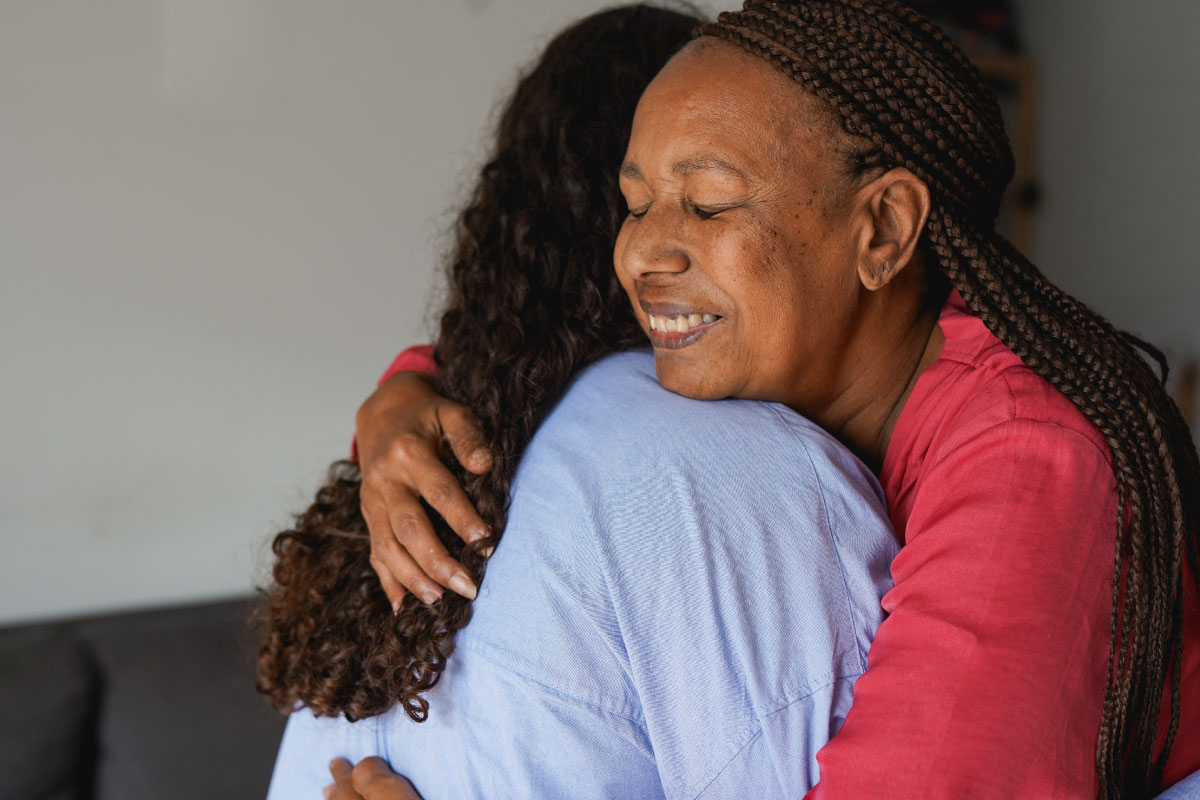
We should never underestimate the power of a conversation.
A conversation can help someone feel seen. A conversation can reduce isolation. A conversation can encourage someone to seek help. A conversation can connect a person to a counsellor, psychologist, doctor, trusted family member or other appropriate support.
A conversation can also change the person having it. It can teach us to become more compassionate, more attentive and more willing to notice the people around us.
We should not assume that someone is okay simply because they look okay. And we should not wait for a tragedy before deciding that mental health matters.
As Guyana joins the global community in observing Suicide Prevention Month and World Suicide Prevention Day on 10 September 2026, Mindful Guyana Inc. invites every Guyanese to take one practical step: start the conversation.
Ask someone how they are doing - and genuinely listen to the answer. Check on a friend. Talk with your children. Reach out to someone who may be isolated. Learn more about mental health. Challenge stigma when you hear it. Encourage someone who is struggling to seek appropriate professional help. Support organizations working in mental-health promotion and suicide prevention.
If you are a teacher, learn how to recognize warning signs and respond appropriately. If you are an employer, make mental wellbeing part of workplace culture. If you are a community leader, create safe spaces for dialogue. If you are a journalist or communicator, report responsibly. If you are a policymaker, support sustained investment in prevention and mental-health services.
And if you are struggling yourself, please do not believe that you have to carry the burden alone. Reach out to someone you trust and seek professional help or emergency assistance when needed.
Changing the narrative on suicide is not a one-day event. It is not a hashtag. It is not a campaign poster. It is a commitment.
A commitment to listen. A commitment to learn. A commitment to challenge stigma. A commitment to strengthen support. A commitment to invest in prevention. A commitment to treat mental health as an essential part of public health and national development.
And above all, it is a commitment to one another.
Guyana has an opportunity to become a society where conversations about mental health are ordinary, compassionate and constructive; where asking for help is seen as strength; where communities know how to respond to distress; and where no one feels that they must suffer in silence.
The global call for 2026 is especially clear: Changing the Narrative on Suicide.
Our call at Mindful Guyana Inc. is equally clear: Start the Conversation.
Because sometimes the conversation we are afraid to start may be the conversation someone desperately needs.




Stay updated with our charity’s news and see the impact we’re making changes together.



Copyright © 2026 Mindful Guyana Inc. | Designed By Cyber Fox Media